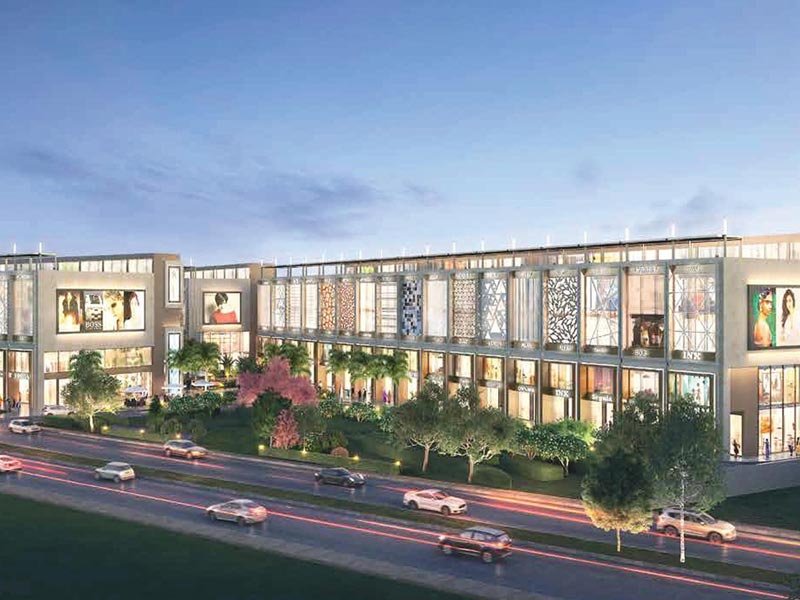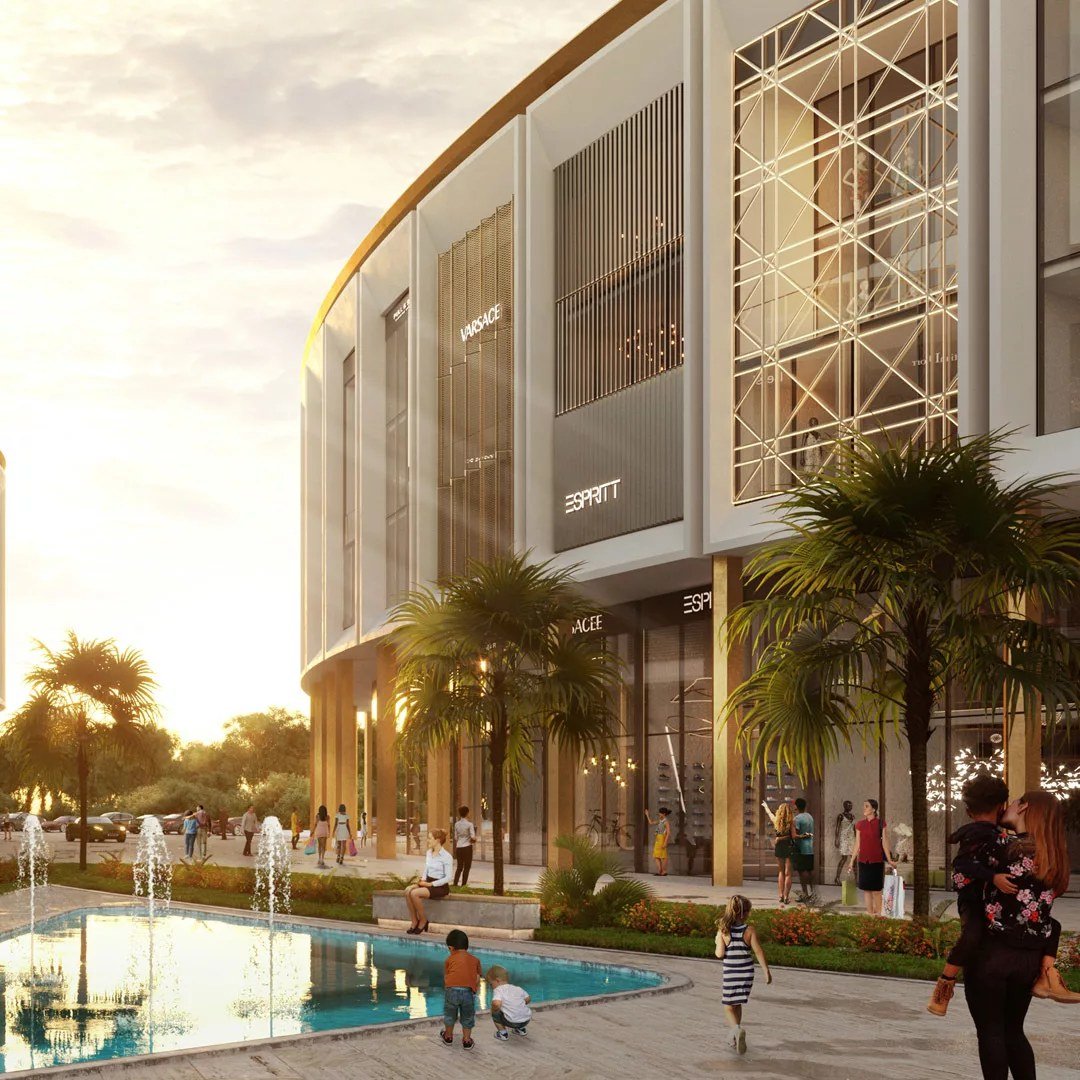
"Should I invest in an SCO plot?" is one of the most common questions our sales desk fields, and the honest answer is: it depends on your capital, your time horizon and your appetite for the hands-on work an SCO plot actually requires. This piece breaks down how returns on an SCO plot actually form, what drives yield and resale value up or down, and the risks that don't always make it into a glossy brochure — so you can evaluate a DLF SCO plot with realistic expectations rather than borrowed enthusiasm from a sales pitch.
A quick but important disclaimer before we go further: this article is for general information only and is not financial or investment advice. Property markets, rental demand and construction outcomes are inherently uncertain, and past performance of any DLF project or micro-market is not a guarantee of future results. Please speak with an independent financial advisor about how a commercial property purchase fits your specific financial situation before committing capital.
How Returns on an SCO Plot Actually Form
Unlike a fixed-income instrument, an SCO plot doesn't generate a single, predictable return figure. Total return is really the sum of two separate components that behave differently over time. The first is capital appreciation — the change in the plot and building's value from purchase to eventual sale, driven by micro-market development, infrastructure improvements, and how fully the surrounding high street gets built out and occupied. The second is rental income — what you earn by leasing the completed building, either to a single tenant or across multiple floors. These two components can move independently: a plot in an area with strong long-term appreciation potential might still take time to generate meaningful rental income if the surrounding high street is slow to occupy, and vice versa. A realistic investment view treats them separately rather than blending them into a single expected number too early.
What Actually Drives Rental Yield
Rental yield on an SCO unit is shaped by a specific set of factors, and understanding them lets you evaluate a project on its actual fundamentals rather than a sales pitch. Footfall and catchment density matter most — the number of households, offices or daily commuters who realistically pass or live near the plot. Frontage and visibility — corner plots and those with dual road frontage typically lease faster and at a premium versus mid-block units. Occupancy of the surrounding stretch — a high street where most plots are already built and tenanted supports stronger rents across the board than one that's still half-vacant, because retail and F&B tenants generally prefer locating near other active businesses rather than being the first mover on an empty street. Leasing strategy — a single, credit-worthy anchor tenant across the ground floor tends to offer more stability (but often a lower headline rent) than leasing multiple floors separately to smaller tenants, which can generate higher blended rent but with more vacancy and management overhead.
Comparing Golf Course Extension Road vs Township High Streets
DLF's current SCO portfolio splits between Golf Course Extension Road plots (DLF Arcade 68, DLF Central 67) and township high streets (DLF Alameda Central, DLF Gardencity Central), and each carries a distinct investment profile worth weighing on its own terms. Sector-road plots benefit from a larger, more open catchment and typically suit tenants who want maximum visibility and don't need a captive audience — the trade-off is that their performance depends more on the pace of broader sector development around them. Township high-street plots benefit from a built-in, relatively captive customer base tied directly to how many households move into the surrounding township — the trade-off is that performance is more closely linked to the specific township's occupancy timeline, which is a factor worth tracking closely if you're considering DLF Alameda Central or DLF Gardencity Central specifically.
Modelling Your Own Numbers Instead of Relying on Broker Promises
Rather than accept a broker's verbal yield promise at face value, we'd encourage every serious SCO buyer to build a simple back-of-envelope model themselves before committing capital. Start with the all-in acquisition cost — plot price, plus a realistic construction budget for your intended building, plus registration and other transaction costs. Then estimate a conservative rental figure per square foot for comparable, already-operational commercial space in the same micro-market (your sales desk can help source comparables), applied to your building's leasable area, minus a reasonable vacancy allowance for the period between construction completion and full occupancy. Dividing the resulting annual rental estimate by your all-in cost gives you a rough yield figure you can sanity-check against any number a broker quotes you — and it's a far more defensible basis for a decision than a verbal assurance.
Risks Worth Naming Directly
A responsible investment discussion names the risks plainly rather than glossing over them. Construction risk — cost overruns, contractor delays and approval timelines are the buyer's responsibility on an SCO plot, unlike a ready-built unit. Occupancy risk — if neighbouring plots in the same project are slow to build and open, your own unit's footfall and leasing prospects suffer in the interim. Illiquidity — commercial real estate, including SCO plots, cannot be exited as quickly or cleanly as listed financial instruments; a sale can take months and depends on finding a buyer willing to transact at your expected price. Tenant concentration risk — if you lease to a single anchor tenant, losing that tenant means the entire building sits vacant until a replacement is found, whereas floor-wise leasing spreads that risk but adds management complexity. None of these risks make SCO plots a poor investment by default — they simply need to be priced into your expectations and your holding-period plan.
Questions to Ask Before You Commit Capital
- What is the current occupancy and construction status of the overall project, not just my specific plot?
- Can the sales desk share indicative rental figures reported by existing owners in comparable, operational DLF SCO developments?
- What is my realistic all-in cost, including construction, and how does that compare to prevailing rents in the micro-market?
- What is my exit plan and expected holding period, and how liquid is resale likely to be in this specific project and micro-market?
- Have I discussed this purchase with an independent financial advisor as part of my broader portfolio, not in isolation?
Where SCO Plots Tend to Make the Most Sense
Based on the factors above, SCO plots tend to make the most sense for investors with a medium-to-long holding horizon who are comfortable managing a construction phase, have the capital to fund both the plot and construction without over-leveraging, and are diversifying into commercial real estate as one part of a broader portfolio rather than betting a single, undiversified sum on one plot's performance. They tend to make less sense for anyone needing near-term liquidity, or expecting a passive, hands-off income stream from day one without a construction and leasing runway.
How This Compares to Ready Commercial Formats
If the construction and leasing runway of an SCO plot doesn't fit your timeline, it's worth comparing the format directly against ready, strata-titled retail or office units, which trade the flexibility and freehold ownership of SCO for immediate, ready-to-lease possession. We've laid out that comparison in detail in DLF SCO Plots vs Traditional Retail Shops, including where each format tends to have the edge.
Why SCO Became Gurugram's Go-To Commercial Investment Format
It's worth understanding briefly why SCO plots moved from a niche plotted category to one of the most discussed commercial formats in Gurugram, because that context shapes how much weight to put on the format's current popularity. Two forces converged. First, a wave of Gurugram's residential development over the past decade — new sectors, townships and independent floor projects — created dense, underserved pockets of housing that needed local retail and services, and SCO plots were the planning mechanism used to fill that gap along sector roads and township edges. Second, investors who had grown comfortable with plotted residential formats (independent floors, builder plots) found SCO's land-ownership structure familiar and appealing relative to strata-titled commercial alternatives, which helped absorption move quickly once early SCO projects demonstrated the model could work. That said, rapid popularity in a format doesn't automatically mean every project or every plot within it performs equally — the fundamentals discussed throughout this piece still apply project by project.
Diversifying Within a Single Developer's SCO Portfolio
Because DLF currently has four live SCO projects across two distinct location types, some investors choose to split capital across more than one project rather than concentrating it in a single plot — for instance, holding one Golf Course Extension Road plot and one township high-street plot to balance the different footfall and occupancy dynamics discussed earlier. This isn't a strategy that suits every budget, since SCO plots typically require meaningful capital per unit, but for investors with the resources to consider more than one purchase, it's a reasonable way to reduce exposure to any single micro-market's specific occupancy timeline. As always, this is a structural observation, not a recommendation — whether diversifying across projects makes sense for you depends on your total capital, liquidity needs and overall portfolio construction, which is best discussed with your financial advisor.
Exit Strategies: Thinking About the End Before the Beginning
A surprising number of SCO buyers focus entirely on the buying and construction phase and give little thought to how they'll eventually exit, whether that's after a few years or as a longer-term hold. Three broad exit paths exist. You can sell the built asset to another investor or owner-operator once construction and leasing are complete — typically the most straightforward path once the surrounding high street has matured. You can sell the undeveloped or partially developed plot before completing construction, which is faster but usually commands a lower price than a completed, tenanted building. Or you can hold indefinitely for rental income, treating the asset as a long-term income stream rather than a capital-gains play, potentially passing it on as a family asset. Deciding roughly which of these paths you're aiming for — even loosely — before you buy helps shape decisions earlier in the process, from how much you invest in construction quality to how you structure your leasing agreements.
A Simple Framework for Comparing Yield Expectations Across Micro-Markets
Rather than compare DLF's four SCO projects on headline price alone, it's more useful to compare them on the underlying demand drivers that ultimately determine yield. For Golf Course Extension Road plots like DLF Arcade 68 and DLF Central 67, the relevant questions are: how dense is the existing residential catchment already, and how much additional residential supply is still coming online nearby that will add to footfall over the next few years? For township high-street plots like DLF Alameda Central and DLF Gardencity Central, the more relevant question is: what proportion of the township's total planned residential units are already occupied, since that occupancy percentage is a more direct proxy for captive footfall than the sector number alone. Our sales desk tracks these occupancy and construction figures across DLF's own developments and can share the current status for whichever project you're evaluating — using that data point by point is a more defensible basis for a yield expectation than a single verbal quote.
A Hypothetical Walkthrough (Illustrative Only)
To make the modelling approach described earlier more concrete, here's a purely hypothetical, illustrative walkthrough — the figures are invented for explanation only and should not be treated as a projection for any real DLF project. Imagine an investor buys a plot for an all-in cost of X (plot price plus registration), then spends an additional amount equal to roughly a third of X on construction, architect and contractor fees, bringing the total investment to approximately 1.3X. Once built and leased, if the building generates an annual rent equivalent to 6% of that total 1.3X figure, the investor's gross yield on total invested capital works out to a little under 5% of the original plot price alone, before accounting for maintenance, property tax, any vacancy period, and financing costs if a loan was used. Running this kind of simple arithmetic — with your own realistic numbers substituted for X — before you buy is far more useful than any single yield percentage quoted verbally, because it forces you to see how construction cost, not just plot price, shapes your actual return on total capital deployed.
This exercise also highlights why the timing of rental income matters as much as the eventual rate. A plot that takes eighteen months to construct and lease, versus one that takes six, effectively loses a year of potential rental income on the same capital — a cost that rarely shows up in a simple annual yield percentage but materially affects your real, time-weighted return. Factoring in a realistic construction and lease-up timeline, not just an end-state yield assumption, is one of the more overlooked steps in evaluating any SCO plot purchase.
Final Thoughts
SCO plots can be a genuinely attractive commercial investment for the right buyer profile, but "genuinely attractive" and "guaranteed" are two very different claims — and any pitch that blurs the two deserves scrutiny. The most useful thing you can do before committing capital to any DLF SCO project is build your own realistic cost and yield model, ask pointed questions about the specific project's occupancy status, and treat every verbal yield figure as a starting point for your own diligence rather than a promise. Our sales desk is happy to share the current construction and sales status, comparable rental data where available, and a site visit for DLF Arcade 68, DLF Central 67, DLF Alameda Central or DLF Gardencity Central — reach out whenever you're ready to look closer.